

How Cost Consultancy Protects Construction Budgets in Dubai
Cost certainty is built through disciplined decisions from feasibility to final account. Learn how a cost consultancy protects a development budget at every stage.

Construction budgets are rarely lost through one dramatic event. More often, pressure builds through optimistic early allowances, design growth, late decisions, incomplete tender information, untested alternatives and changes that are reviewed individually rather than as a cumulative forecast.
A cost consultancy creates commercial control from the first feasibility test to final account. The aim is not simply to reduce cost. It is to help the owner invest in the right priorities, understand exposure early and make decisions while options remain available.
What does a construction cost consultant do?
A cost consultant advises on the financial management of a construction project. Depending on the scope and stage, this can include estimating, benchmarking, cost planning, value engineering, procurement advice, tender analysis, change control, payment review, cash-flow forecasting and final-account support.
The most useful cost advice is connected to scope, design, programme, procurement and risk. A number without assumptions or context can create false confidence. A reliable cost plan shows what is included, what is excluded, how quantities and rates were developed, what allowances remain and where uncertainty sits.
Cost control begins during feasibility
At feasibility stage, the budget must reflect more than the visible building work. It may need to account for site preparation, external works, utilities, authority-related requirements, professional fees, surveys, specialist systems, testing, fit-out interfaces, contingencies and escalation assumptions.
The cost consultant works with the owner and design team to test the development brief against market-informed allowances. Scenario testing can compare massing, area, specification or phasing options before a preferred direction is fixed.
The key question is not “What is the cost per square metre?” It is “What exactly does this rate assume, and is it comparable to this project?”
The cost plan as a design tool
As design develops, the cost plan should develop with it. Each design stage gives the team more information and should reduce uncertainty.
A structured cost plan breaks the project into elements, making it possible to see where value is concentrated and where design movement is affecting the budget. It can highlight changes in façade area, structural approach, building services, finishes, landscaping, specialist equipment or back-of-house requirements.
This allows the team to respond precisely. Instead of imposing an arbitrary percentage cut across the project, the owner can protect high-value user experiences and adjust lower-priority areas.
Why change control matters
Projects change. The commercial risk comes from changes that are instructed before scope, cost, time and knock-on effects are understood.
A robust change-control process should record:
- the reason for the proposed change;
- the exact scope and drawings affected;
- the estimated direct cost;
- programme and procurement implications;
- design or operational consequences;
- available alternatives;
- required approval authority; and
- the effect on the forecast final cost.
Even when an individual change appears affordable, the cumulative trend may not be. A live change log keeps that trend visible.
Procurement decisions shape cost certainty
The timing and quality of procurement have a major effect on budget confidence. Tendering too early may produce broad allowances and qualifications. Tendering too late can reduce competitive tension or threaten the programme.
The cost consultant supports package strategy, prequalification, tender documentation, bid evaluation and commercial clarification. A proper evaluation normalises the bids so the owner can compare scope, exclusions, risks and proposed alternatives on a like-for-like basis.
The lowest tender may not be the best commercial outcome if it relies on omissions, unrealistic resources or claims-prone qualifications.
Forecasting during construction
Once contracts are awarded, cost reporting should move from budget to forecast. The owner needs a current view of:
- original contract values;
- approved changes;
- pending and potential changes;
- provisional sums and allowances;
- claims and commercial risks;
- payments and cash flow; and
- forecast final cost.
This forecast should align with the project risk register and programme. For example, a delayed design decision may create both time exposure and an acceleration cost. Reporting those items separately can hide the real consequence.
Value engineering versus cost cutting
Value engineering examines how a required function or outcome can be achieved more effectively. Cost cutting simply removes expenditure, sometimes at the expense of quality, operation or revenue.
Good value engineering is early, multidisciplinary and evidence-based. It considers capital cost, lifecycle implications, buildability, procurement, programme, maintenance and the user experience. It also protects the design intent by making priorities explicit.
What owners should expect in a monthly cost report
A useful report should be concise enough to support a decision and detailed enough to be audited. At minimum, it should show the approved budget, commitments, forecast final cost, contingency position, major changes, emerging risks, cash flow and decisions required.
It should also explain movement since the previous report. If the forecast changed, the owner should immediately understand why.
How to appoint a cost consultancy
Assess experience with comparable project types, local market understanding, the proposed team, estimating methodology, cost-plan structure, tender capability and reporting quality. Clarify whether the scope includes measurement, procurement support, change control, claims review, payment certification support and final account.
Ask the consultant to explain the largest uncertainties in your current brief. Insight at this stage is often more valuable than a polished generic presentation.
Frequently asked questions
When should a cost consultant be appointed?
As early as possible, ideally during feasibility. Early cost advice helps shape a viable brief and prevents the design from developing beyond the available budget.
What is the difference between a cost estimate and a cost plan?
An estimate provides an anticipated cost based on the available information. A cost plan allocates the budget across project elements and becomes a control tool against which design development and changes can be measured.
Does cost consultancy only focus on reducing construction cost?
No. Its purpose is to improve cost certainty and value. That can mean protecting an important specification, reducing waste, choosing a more suitable procurement approach or considering lifecycle performance rather than simply lowering the initial price.
Bring clarity to every commercial decision
Accurex integrates cost consultancy with project, design and construction management so budget decisions stay connected to the wider development outcome. Talk to our team about establishing or recovering commercial control on your Dubai project.
Related insights

Project Management Consultancy in Dubai: How to Choose the Right Partner
The right project management consultancy turns a complex development into a controlled, visible and accountable programme. Here is what UAE owners should assess before…

Construction Project Management in the UAE: A Stage-by-Stage Guide
Successful construction project management connects every stage of a UAE development. This guide shows owners what should happen, when and why.
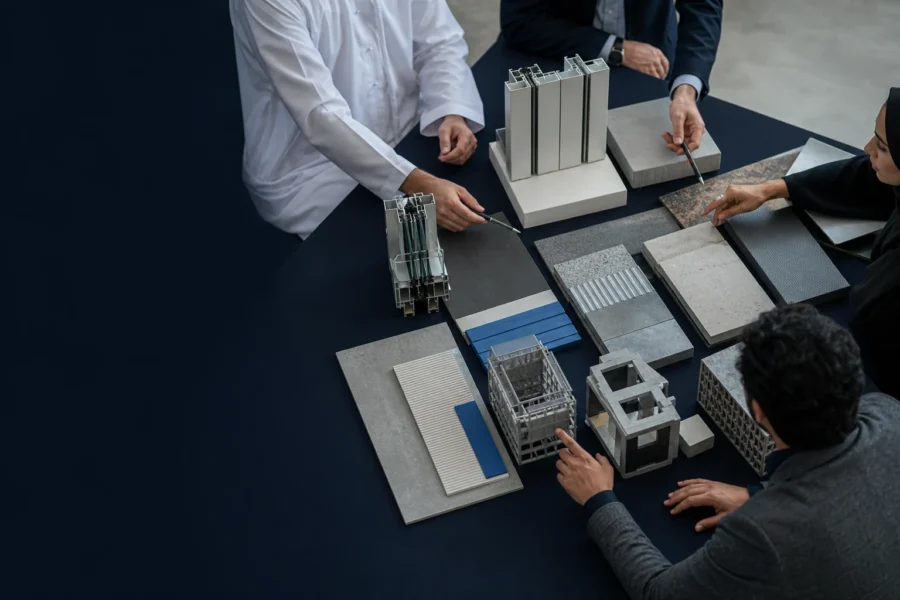
Value Engineering in Construction: Reduce Cost Without Diluting Design
Effective value engineering protects what matters and improves how it is delivered. Here is a practical framework for UAE development teams.